
If your team doesn't have skin in the game, you can't expect them to play like they do.
Have you ever looked around at your team and wondered why nobody seems to care the way you do?
Have you hired good people, invested in them, and still felt like you were the only one with any real urgency?
Have you ever thought the problem was motivation, culture, management — when the real answer might be compensation structure?
Most business owners spend years trying to solve employee engagement with better communication, better culture, better management. Rob Gallaher tried all of it. Then he tried profit sharing. His first attempt was a complete disaster. What he built after that changed everything.
This is the conversation we've never had on this podcast in almost five years of episodes. It was long overdue.
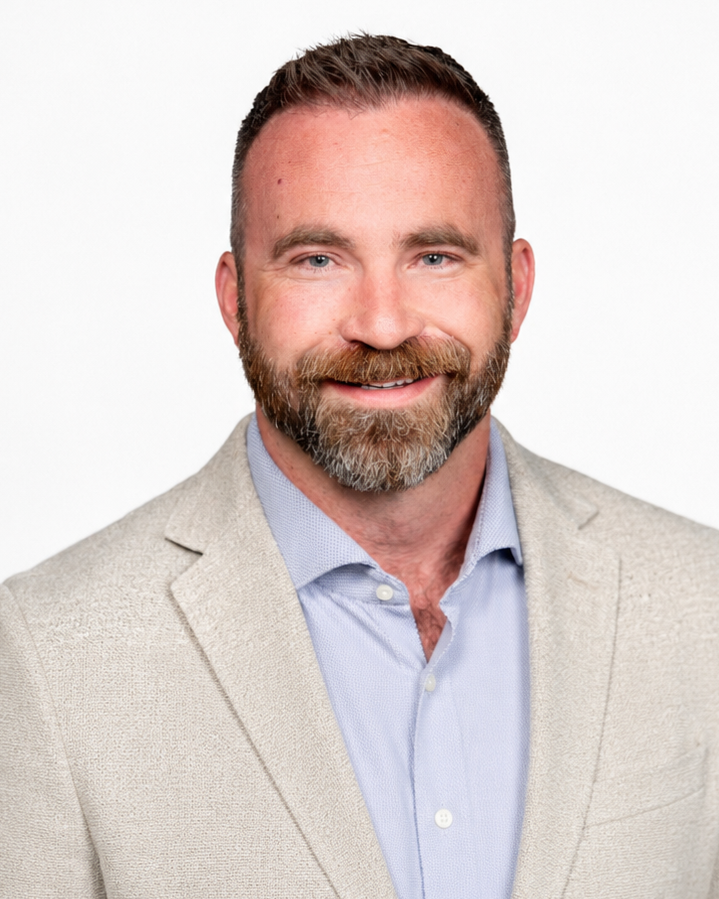
(00:00) The Business Owner Who Got Tired of Pulling the Weight Alone
Rob Gallaher is an Entrepreneur and Founder of ProfitX. He started his first construction company in 2010 and has since grown to lead five businesses across multiple industries.
By the time he had 30 employees across two companies, he was exhausted.
He was micromanaging. He couldn't delegate. He double-checked everyone's work because nobody seemed to think, care, or operate the way he did.
He didn't have a bad team. He had a compensation problem he hadn't identified yet.
After years of trial, failure, and refinement, he built a profit sharing system that transformed how his teams work, his retention, and his quality of life as a business owner.
He's since published a book and launched an online course through ProfitX.co to help other business owners do the same.
(02:00) Nobody Told You How to Do This Because Nobody Wrote It Down
When Rob first encountered the idea of profit sharing, he could find theory. He could not find instructions.
He sat down with a blank piece of paper and immediately got stuck. The questions alone were overwhelming:
Do you base it on gross profit or net profit?
What percentage do you share?
Who in the organization gets it?
How do you set it up so it actually changes behavior?
He brought in two of his leaders. They looked at P&Ls and balance sheets. They made their best guesses.
The next quarter, they cut their first profit sharing checks. It was, by his own account, a total disaster. He spent thousands of dollars and saw nothing different in return.
That failure is what the book and course were built from. Every rule in Rob's system was learned the hard way.
(06:00) What Getting It Wrong Taught Him
Rob went back to the drawing board after that first failed attempt. He brought more people into the conversation, including the employees who had received the checks.
The gap he discovered was this: the program wasn't connected to anyone's daily behavior. It wasn't tied to anything that felt real or immediate. So nothing changed.
"The biggest complaint business owners have is the whole thinking, caring, and working like a business owner. Well, the reason why your employees don't do that is because they don't get paid like a business owner does." — Rob Gallaher, Entrepreneur and Founder of ProfitX
The fix wasn't a bigger payout. It was a different timing and a different structure — one that connected every team member's financial reality to the company's performance in a way they could actually feel.
(21:00) Why Monthly Payouts Change Everything
This is the part most businesses get wrong when they first try to implement profit sharing.
Quarterly bonuses don't change behavior.
Rob watched his own team sprint in the last two weeks of a quarter. January and February were business as usual. Nobody thought about the bonus they'd receive in April until it was almost time to earn it.
Annual bonuses and Christmas payouts are even worse.
Nobody is working harder in March because of a bonus they might receive in December. They wait until after the check clears to hand in their resignation. January is the most common month for two-week notices, and this is exactly why.
Monthly is different.
Everyone thinks about their bills monthly. Groceries, rent, car payments — none of us budget quarterly. When a profit sharing check lands every month, it connects directly to the financial needle people are already watching. That's when daily behavior starts to shift.
Rob describes it as a gas tank. Every month, the team is filling it up together. When they know that, they start thinking about how to make it fuller.
(11:00) What Happens to a Team That Wins Together
Once a profit sharing program is working, Rob says the changes go well beyond motivation. A few things he didn't anticipate:
Teams self-regulate. When everyone's check depends on collective performance, underperformers become visible fast. The team will help identify and resolve the problem without management having to lead the charge.
People stop clocking in and out. An estimator driving to a job site starts listening to a podcast about becoming a better estimator. The work becomes something people think about because they have a reason to.
Retention improves above market rate. A superintendent making $80,000 a year with a consistent monthly profit sharing payout is effectively earning more than the $80,000 competitor down the street is offering. The math becomes a reason to stay.
Business owners stop feeling alone. This was the result Rob said he didn't see coming. When the team is invested in the same outcome, the owner is no longer the only one pulling.
Hello, World!
So Why Isn't Everyone Doing This?
Two reasons, really.
First, most business owners don't know about it. It's not talked about the way other business strategies are. It doesn't get preached at conferences or packaged in popular management books.
Second, when they find the idea, there's nowhere to go. No how-to guide. No spreadsheet. No framework for whether to use gross or net profit, what percentage to share, or who qualifies.
Rob's book is, by his own research, the first resource that actually walks you through implementation.
The conversation goes deeper on where the idea breaks down for companies scaling past ten employees, how to structure the criteria for who receives it, and the very real difference between this and an employee stock ownership plan.
The full episode is worth your time if you've ever felt like you're carrying more than your share of the business you built.
Connect with Rob Gallaher: Profit Sharing, The Power of Shared Success | Website and course: https://profitx.co | Instagram and Facebook: @RobGallaher | LinkedIn
Connect with Traci here: https://linktr.ee/HRTraci