Leading From Within: Self-Awareness, Collaboration, and Human Connection at Work
You can't lead other people well if you don't know who you are.
Have you ever left a meeting feeling like nobody actually heard what you said?
Have you managed someone with obvious potential who never quite opened up enough to use it?
Have you sat in a collaboration session that looked like teamwork but felt like everyone waiting for their turn to talk?
Most leaders spend their careers getting better at strategy, communication, and execution. Very few spend serious time on the question underneath all of it: who are you, and how is that shaping the way you lead?
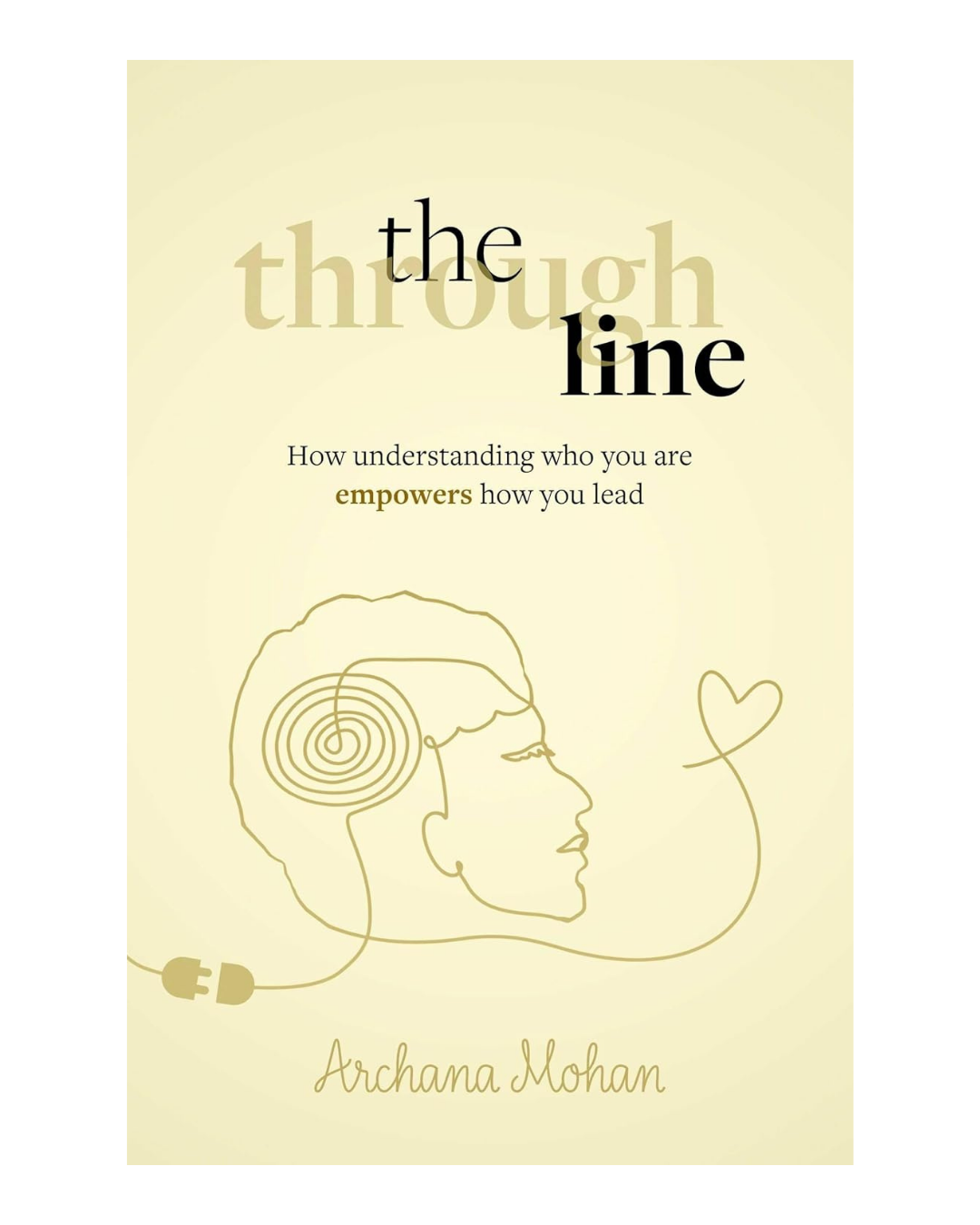
Archana Mohan has thought about this more than most. As a senior executive in the finance sector and author of The Thru Line, she built an entire framework around it. And her answer might be simpler than you'd expect.

(00:00) The COTO Who Started in a Mail Room
Archana Mohan is Chief Operations and Technology Officer in the finance sector and author of The Thru Line: How Understanding Who You Are Empowers How You Lead. She holds a BA in French Literature from Brown University, an MA in Education from Columbia University, and an MBA in Finance from Yale.
Her very first job was in the mail room for an HR director. She hadn't thought much about it until she started writing the book and realized the thread had been there all along.
Archana grew up in a multicultural environment and spent time as both a teacher and a business leader. That combination shapes how she thinks about the workplace: not as a machine to optimize, but as a collection of humans trying to figure out how to do something meaningful together.
What drove her to write the book wasn't expertise. It was the memory of not quite belonging. Of not being heard. Of questioning whether her voice had a place in the room. That experience is exactly what she's spent the later phase of her career trying to undo for others.
(02:20) The Question That Became a Framework
In March 2020, Archana found herself with something most leaders never get: time to sit still.
COVID lockdown stripped away the pace that usually prevents real reflection. And the questions that surfaced weren't strategic ones. They were personal.
What kind of leader did she want to be? What kind of leader did she want to work for?
"Who we are really influences how we lead." — Archana Mohan
That realization became the foundation of The Thru Line. The premise isn't complicated: before you can build teams, drive change, or create belonging for others, you have to understand what you're actually bringing into the room.
The framework she built is designed to be practical, not philosophical. Not a personality test to file away. A tool for showing up more intentionally, starting with a more honest answer to the question of who you actually are.
(11:07) Nobody Actually Knows What Collaboration Means
Ask ten people in your organization to define collaboration and you'll get ten different answers.
Most will describe something that sounds like alignment. Getting buy-in. Making sure everyone agrees before moving forward.
That's not collaboration. That's a power structure with better branding.
Real collaboration requires something harder: being genuinely open to an idea that isn't yours, including one that might be better than yours. Archana offers three questions worth bringing into your next team meeting:
What does collaboration actually look like in this room? Is one person issuing direction while everyone else takes notes?
What does it feel like when you know you're genuinely collaborating with someone?
What would have to be true about the environment for people to share what they actually think?
Most organizations have optimized for the appearance of collaboration without creating the conditions for the real thing. Until the people in the room feel safe enough to bring their full perspective, you're working with a fraction of what the team is capable of.
(17:12) Listening Is a Skill, We Treated It Like a Given.
Here's what school taught you about listening: sit quietly and absorb.
Here's what it taught you about speaking: have the right answer.
That training follows most people directly into the workplace. They arrive ready to demonstrate competence, ready to give the answer, ready to be evaluated on whether they got it right. Listening, actual listening, got left out of the curriculum entirely.
Archana calls it the most undervalued skill in the workplace.
The cost of not listening well isn't just missed ideas. It's the signal it sends to everyone in the room. When someone doesn't feel heard, they stop offering. They stop taking the risk of sharing the thought that might sound incomplete or uncertain. The quality of what the group produces quietly goes down without anyone being able to name why.
The fix isn't a listening workshop. It's leaders who model what genuine curiosity looks like in practice. Leaders who sit with not knowing. Who ask questions they don't already have answers to. Who treat someone else's perspective as data worth taking seriously.
(23:18) Competing With vs. Competing Against
If you're a competitive person, you've probably been told at some point to dial it down in collaborative settings. That your drive to win gets in the way. That you need to leave your ego at the door.
Archana's take is more useful than that. Competition and collaboration don't have to work against each other. The question is who you're competing with.
Competing against your teammates means the goal is for your idea to win. Competing with them means the goal is for the group to win, and you're bringing everything you have to that shared outcome.
"Am I competing with you or am I competing against you? And those two things have different results." — Archana Mohan
That distinction changes how you listen. How you respond when someone else has a better idea. Whether you're actually building something or just performing participation while waiting for your turn.
The leaders who get this right aren't less competitive. They're just competitive in a direction that actually produces something.
Hello, World!
What Does This Mean for You?
Knowing yourself doesn't mean having yourself figured out.
It means being honest enough about your defaults, your blind spots, and your impact on others to lead with intention instead of habit. That's the work. And it doesn't stop.
The full episode goes deeper on the external dimension of self-awareness that most people don't know exists, why the collective is exponentially more powerful than any individual, and what it actually means to create an environment where people feel like they belong.
Connect with Archana Mohan: Website | LinkedIn | The Through Line: How understanding who you are empowers how you lead
Connect with Traci here: https://linktr.ee/HRTraci