
And most companies are building it completely wrong.
Have you ever worked somewhere that had all the perks (the snacks, the flexible Fridays, the ping pong table) and still felt completely hollow?
Do you find yourself wondering why your organization keeps throwing money at the problem instead of actually solving it?
Is "culture" starting to feel like a buzzword that means everything and nothing at the same time?
Most companies treat culture like a line item. A budget. Something you purchase with perks and benefits packages and recognition awards.
That's not culture. That's furniture.
Real culture is invisible. It's how people feel walking into a building on a Monday morning. It's the loyalty that keeps your best people around when a competitor comes calling. It's the reason some teams feel electric and others feel like a slow drain.
And the gap between companies that get this and companies that don't? It shows up everywhere: in retention numbers, customer satisfaction scores, and the bottom line.
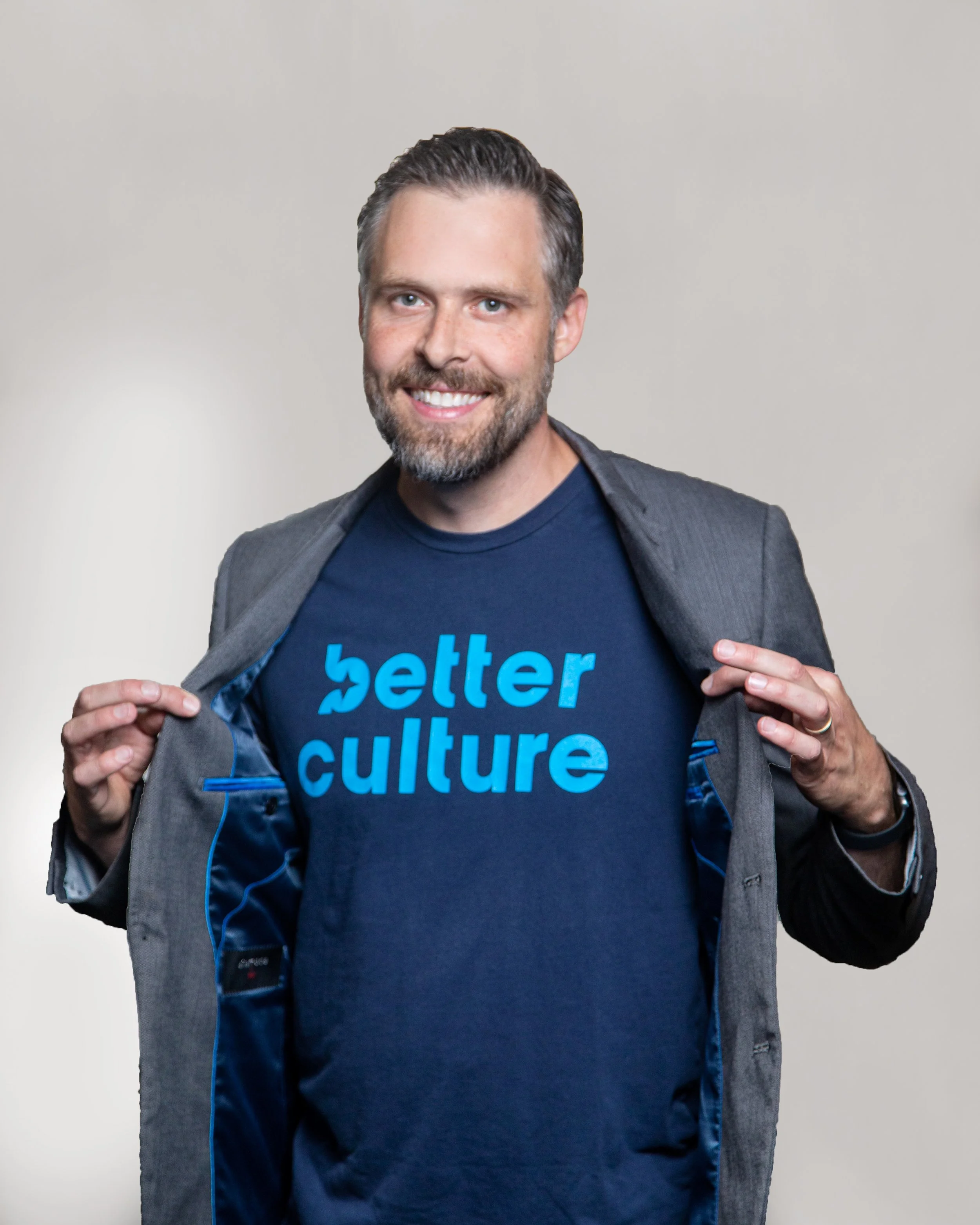
(01:00) The Engineer Who Became a Culture Evangelist
Brett Hoogeveen didn't set out to spend his career obsessing over workplace culture.
He went to school for engineering. Numbers, math, systems. That was his world. Culture wasn't even on his radar.
Then he got into the professional world and something hit him. The work mattered less than he expected. Who he worked with, the type of company he worked for, the environment he spent 40+ hours a week inside. That's what was actually shaping his energy, his satisfaction, his life.
Brett is now the co-founder of Better Culture, a leadership development and technology firm working with everyone from scrappy startups to Fortune 500 companies. He travels nationally as a speaker and consultant with one singular focus: helping organizations build dominantly successful cultures through practical, actionable approaches.
His philosophy, distilled: a better culture means a better business. Simple. And harder than it sounds.
(04:39) Foosball Tables Are Not Culture (Stop It)
Here's where most organizations get derailed before they even start.
They see culture as the visible tip of the iceberg: the stuff you can point to and photograph for your careers page. The napping pods. The catered lunches. The unlimited PTO policy nobody actually uses.
That's not culture. Those are signals that might or might not mean anything.
Culture lives under the surface. It's made up of:
How loyal people actually feel to the organization
How deep the relationships are between colleagues
How much people genuinely want to show up and do the work
Whether employees feel proud of where they work
Whether they feel the organization cares about their success
When companies treat culture as an expense (something you pay for) they miss the entire point. The leaders who build the best cultures understand it the other way around.
Culture doesn't cost you money. It makes you money.
And the difference between those two mental models changes everything about how you lead.
(10:31) Why Recognition Events Are a Band-Aid on a Broken Arm
Let's say your survey scores come back and employees don't feel appreciated. So you do what feels logical: you plan a recognition event. You create an awards budget. You put it on the calendar four months from now.
Box checked, right?
Not even close.
Brett draws a sharp line between two very different leadership realities:
Version A: The Event Mindset. A recognition event, once a quarter or year, where some people get acknowledged, and most go unnoticed until next time.
Version B: The Daily Mindset. A leader who wakes up every day with the belief that it is my job to make sure my team feels seen, appreciated, and valued, and then acts on that belief in small, consistent ways all week long.
These aren't two versions of the same thing. They're almost 180 degrees apart.
One is a drip in the bucket. The other is a full bucket.
The mindset shift (from "we have a recognition program" to "I am personally responsible for my team feeling appreciated every day") is where real culture change actually starts.
(16:23) Bottom-Up Culture Building: What It Actually Means
A lot of culture conversation focuses on top-down leadership. And yes, executives set the tone. But Brett has spent the last few years developing something different: a framework for building culture from the ground up.
His definition of culture cuts right to it: the attitudes and behaviors that a group of people come to expect from one another.
That means culture isn't the CEO's vision statement. It's what actually happens between people on a Tuesday afternoon.
And that realization opens a door. Because if culture is attitudes and behaviors, then anyone can influence it. Not just managers. Not just HR. Every single person on the team has a role to play.
Step 1: Get clear on the attitudes and behaviors you want to see more of.
Step 2: Do something, consistently, to help people show up with more of those things.
It sounds almost too simple. But most organizations skip both steps entirely. They write core values on a wall, put them in an onboarding deck, and then never connect them to anything that actually changes how people behave day to day.
(18:20) The 20 Tenets of Culture (And Why #1 Is Non-Negotiable)
After years of research and work with best-in-class organizations, Brett's team identified 20 universal attitudes and behaviors that show up in high-performing cultures. They call them the 20 Tenets of Culture, and they apply whether you're an individual contributor or a CEO.
Tenet #1? Be coachable.
And Brett makes a compelling case for why this one leads the list. Coachable people seek feedback. They ask good questions. They're open to doing things differently. They grow.
Take it outside of work. If you want to get healthier, the person who finds a trainer and actually listens gets results. The person who insists they already know enough stays stuck.
A few others from the list:
Be proactively helpful: volunteer, jump in, pitch in without being asked
Assume positive intent: don't spin up drama from ambiguous situations; default to the generous interpretation
Know how to have friendly friction: disagree productively, not destructively
Be forgiving: teams that hold grudges corrode from the inside
These aren't complicated. They're not soft. They're the foundational human competencies that make a team actually function, and they're just as useful for being a good neighbor as they are for being a good employee.
The Work That Matters Most
Here's what makes this conversation different from most culture talk.
It's not abstract. It's not theoretical. And it's not about spending more money.
It's about mindset. About volume. About the decision, made daily, to be the kind of person, leader, or colleague who takes culture seriously enough to actually do something about it today.
You don't have to be perfect. You have to be consistent.
The full episode goes deeper into how Better Culture's software platform operationalizes all of this for organizations that want to build something lasting without reinventing the wheel. Brett also shares how companies are weaving the 20 Tenets into their hiring processes, performance evaluations, and team development, and why the self-assessment piece changes the dynamic entirely.
Plus, Brett has a free resource (the Culture Kickstarter Pack) built specifically for listeners. Two of the 20 Tenets, fully built out with coaching videos, self-assessments, and team exercises, available at betterculture.com/HRTraci.
Connect with Brett Hoogeveen: betterculture.com | LinkedIn | Better Culture Podcast
Connect with Traci here: https://linktr.ee/HRTraci